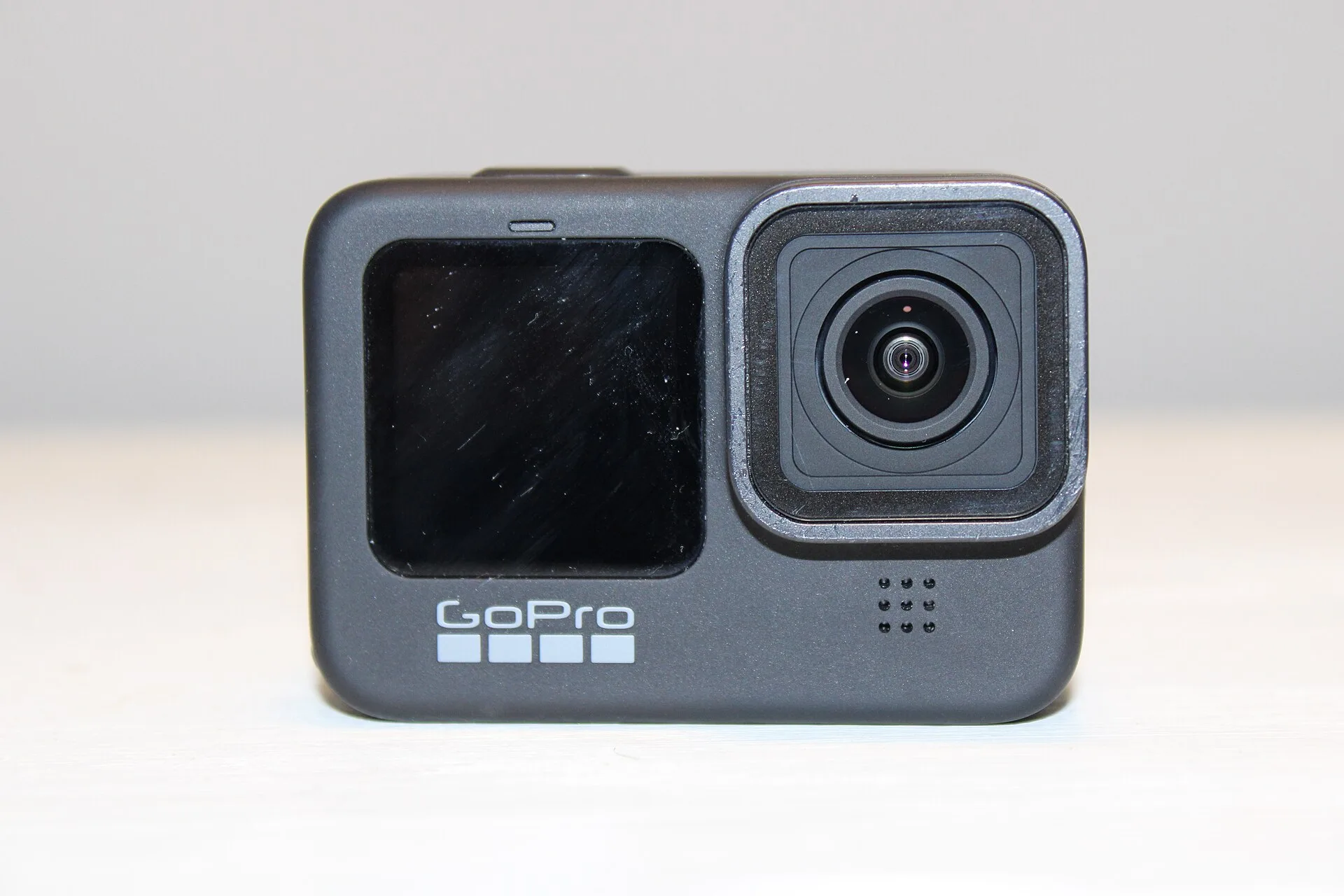
GoPro shares rose 183% in five trading sessions, from $0.5999 on 28 August to $1.70 on 4 September, after the action-camera maker announced it was merging with an optical-components company that supplies AI data centres. On Tuesday 8 September the stock gave back 12.4%, trading at $1.489 in the late morning in New York. Both moves are about the same document, and the document says something more specific than “GoPro is pivoting to AI”.
Read the structure rather than the headline. Starman Optical takes 90% of the combined company. Existing GoPro shareholders keep 10%. The $285 million transaction also clears roughly $92 million of GoPro debt, and the merged business stays publicly listed. A deal in which the acquired party ends up owning nine-tenths of the listed entity is, mechanically, closer to a private company taking GoPro’s listing than to GoPro entering a new business. That distinction is the whole story, and it explains both the surge and Tuesday’s reversal.
Key facts: the GoPro-Starman deal
- Share price: $1.489 at 11:42 ET on 8 September 2026, down 12.4% from the $1.70 close of 4 September (Yahoo Finance); the 52-week range is $0.5701 to $3.05
- The surge: +183% across five sessions from the $0.5999 close of 28 August, after a record low close of $0.5751 on 12 August
- Deal value: $285 million, announced 31 August 2026
- Ownership split: Starman Optical 90%, existing GoPro shareholders 10% of the combined company
- Balance sheet effect: approximately $92 million of GoPro debt repaid at closing
- What Starman makes: optical transceivers – the devices that convert electrical data from CPUs and GPUs into light for transmission over fibre, which is how AI servers talk to each other faster than copper allows
- Timing: both boards have approved; the deal requires shareholder approval and regulatory clearance and is expected to close by the end of 2026
- The other catalyst: YouTuber Markiplier disclosed an 8.5% stake taken in July, making him the largest individual holder
The scale of the participation is worth noting on its own. More than 65 million GoPro shares changed hands by late morning on 8 September, on a stock that closed at $0.5999 eleven days earlier. Volume of that order in a sub-$2 name is retail flow, and the Markiplier disclosure is part of why: a creator with a very large audience taking an 8.5% position turned a delisting-risk microcap into a stock with a following before the merger was ever announced. Attention arrived first, and the corporate action arrived into it.
That sequence matters for how the next few months are likely to trade. A register dominated by holders who bought on a five-day move is a different register from one dominated by institutions who underwrote a transceiver business, and the two groups will react differently to the first piece of disappointing detail in the proxy.
What Starman Optical actually sells
The business at the centre of this is neither speculative nor obscure. Optical transceivers are the pluggable modules that sit at each end of a fibre link inside a data centre, turning electrical signals into light and back again. As AI clusters have grown from hundreds of GPUs to tens of thousands, the interconnect between them has become a genuine bottleneck, and the transceiver market has become one of the fastest-growing parts of the AI supply chain.
That is why this deal is not the same as a shoe company announcing it will lease graphics cards. There is a real product with real demand behind it. Whether Starman specifically is a strong operator in that market is a separate question, and one the public filings will have to answer: the company was privately held, and the merger proxy is where investors will first see its revenue, margins and customer concentration.
The timing is also favourable in a way that has nothing to do with GoPro. Western transceiver suppliers are being repriced by policy: a draft FCC ban on Chinese optical transceivers is redrawing the supply chain in favour of domestic and allied manufacturers, a dynamic we set out in our analysis of the draft FCC rules and in our coverage of AAOI, a listed pure-play in the same category. The merged company is also aiming at aerospace, defence, government and robotics customers alongside the existing camera business.
The three kinds of AI pivot, and which one this is
2026 has produced enough of these announcements to sort them into categories, and the category determines whether the share-price move survives contact with the next earnings report.
| Type | What actually changes | Examples this year |
|---|---|---|
| Operational | An existing infrastructure business is repositioned toward AI workloads. Real revenue, real assets, incremental strategy. | DigitalOcean, up around 240% year to date on its AI-native cloud; Rackspace, up roughly 75% after Q1 on AI infrastructure for regulated industries |
| Transactional | The AI business is acquired, and the legacy shareholders are diluted down to a minority. The listing is the asset being contributed. | GoPro and Starman Optical: 90/10 split, $285m, closing by year-end |
| Nominal | The name or the stated intention changes; the operating business does not, or is sold. | Allbirds, which agreed to sell its footwear business for $39m, rebrand as NewBird AI and lease GPUs, with the shares up roughly 600%; Myseum, up nearly 150% on adding “AI” to its name |
GoPro sits squarely in the middle row, and that is the most interesting place to be. Unlike the nominal pivots, there is an actual operating business arriving with actual customers. Unlike the operational ones, the company doing the pivoting is not really the company that shareholders owned last month. Investors are buying a 10% residual claim on somebody else’s business, plus whatever the camera brand is worth inside it.
The 12.4% fall on Tuesday is what that arithmetic looks like once it is understood. A stock can be simultaneously right to triple on the news that a viable business is arriving and wrong to keep tripling once the dilution is priced.
What this means for the industry
The listing itself has become the scarce asset. This is the structural point, and it goes well beyond GoPro. There is enormous investor appetite for AI-infrastructure exposure and a limited number of listed vehicles offering it. A private optics manufacturer that wants public currency for acquisitions and employee compensation has three routes: a conventional IPO, a SPAC, or a reverse merger into a listed company with a depressed valuation and a recognisable name. The third is faster and cheaper than the first and less stigmatised than the second was after 2022. Expect more of it.
Distressed consumer-hardware brands are the natural targets. The ideal candidate has a listing, a clean shareholder register, a low market value, manageable debt and a brand that generates retail attention. GoPro, down heavily over five years as smartphone cameras ate its market, fits that description precisely. So do a number of other consumer-electronics names trading near a dollar.
The economics of the category are also unusually forgiving right now. Optical interconnect is one of the few parts of the AI build-out where demand is set by cluster architecture rather than by end-user adoption: every additional GPU in a fabric needs links, and the number of links grows faster than the number of processors. That is why the transceiver market has been able to absorb new entrants without the price collapse that usually follows capacity additions in components. A new listed competitor arriving with a cleaned-up balance sheet is therefore less threatening to incumbents than it would be in almost any other hardware niche – which is precisely why the deal could be financed on these terms.
The risk is that the listing route selects for the wrong companies. A business with genuinely strong economics and a clear order book has the option of a conventional IPO at a full valuation. Choosing a reverse merger into a distressed consumer brand is a signal about speed, cost or investor appetite, and it is not always a flattering one. That is not a claim about Starman, whose financials are not yet public. It is the base-rate observation that should frame how the proxy is read when it lands.
And there is a precedent worth remembering. In 2017 and 2018, companies added “blockchain” to their names and their shares moved violently: Long Island Iced Tea Corp. became Long Blockchain, rose about 500%, and was later delisted from the Nasdaq. The pattern is not an argument that every AI pivot fails – hyperscalers are committing something close to $700 billion of AI infrastructure capital in 2026, so the underlying demand is not imaginary. It is an argument that the announcement and the execution are different events, separated by quarters, and that the market prices the first long before it can assess the second.
For the optical supply chain specifically, a well-funded new listed competitor is a mixed development. It validates the category and adds capacity at a moment when demand is real, which is the same demand thesis running through the AI-power complex we covered in our Fermi analysis and the networking layer in our Nokia coverage, where the AI-facing optical division is growing at 20% a year.
What decides the next move in the shares
This is not a forecast, because the inputs that matter are documents that do not exist publicly yet. Four of them will settle the question.
1. The merger proxy. Starman’s audited revenue, gross margin, customer concentration and order book will be disclosed for the first time in the filing that accompanies the shareholder vote. Until then, nobody outside the deal knows what the 90% actually earns. This is the single most important document in the story.
2. The shareholder vote. Retail holders who bought during the surge are being asked to approve a transaction that dilutes them to 10%. That vote is not automatic, and a public campaign against it would be a distinct risk to the timeline.
3. Regulatory clearance. The combined company intends to serve defence and government customers in optical components, a category subject to export controls and foreign-ownership review. Clearance is likely, but the calendar is not entirely in the company’s hands.
4. Whether the camera business is kept or wound down. Management has said consumer cameras and services continue. If that changes, the “GoPro” in the name becomes purely a ticker legacy, and the last reason to value the old business disappears.
Having watched a similar wave of crypto-mining-to-AI conversions reprice through 2025 and 2026, the pattern is consistent: the announcement pop is roughly the same size regardless of quality, and the divergence between the good and the bad transactions shows up two to three quarters later, when the acquired business reports inside the listed wrapper for the first time. GoPro’s version of that moment arrives with the proxy – and then again with the first combined quarter in 2027.
Frequently asked questions
Why did GoPro stock surge?
GoPro announced on 31 August 2026 that it will merge with Starman Optical, a private manufacturer of optical transceivers used in AI data centres, in a $285 million transaction that also repays roughly $92 million of GoPro debt. The shares rose 183% over the following five sessions, from $0.5999 to $1.70, before falling 12.4% to $1.489 on 8 September. A disclosed 8.5% stake by YouTuber Markiplier, taken in July, had already drawn attention to the stock.
How much of the combined company do GoPro shareholders keep?
Ten percent. Starman Optical holders take 90%. That split is why the transaction is structurally closer to a private company acquiring a public listing than to GoPro diversifying into a new business, and it is the key number for anyone assessing what a GoPro share now represents.
What does Starman Optical do?
It makes optical transceivers, the modules that convert electrical data from CPUs and GPUs into light signals sent over fibre. They are what allow servers inside an AI cluster to communicate faster than copper cabling permits, which has made them one of the fastest-growing components in the AI data-centre build-out. The merged company also plans to target aerospace, defence, government and robotics customers.
When does the GoPro-Starman merger close?
Both boards have approved it and the companies expect to close by the end of 2026, subject to a GoPro shareholder vote and regulatory clearance. The combined business will remain publicly traded.
Is this the same as other 2026 AI pivots?
Only partly. It differs from nominal pivots such as Allbirds, which agreed to sell its footwear business for $39 million and rebrand as NewBird AI, because a real operating business with real customers is arriving. It also differs from operational repositionings such as DigitalOcean or Rackspace, because the company shareholders owned last month ends up as a 10% minority. It is a third category: a transactional pivot, where the listing is what GoPro contributes.
What should investors watch next?
The merger proxy, because it will contain Starman’s audited financials for the first time; the shareholder vote, because holders are being asked to approve their own dilution to 10%; regulatory clearance, given the defence and government end-markets; and whether the camera business is retained. Those four items, not the announcement, will determine what the combined company is worth.
This article is analysis, not investment advice. Prices are as of 11:42 ET on 8 September 2026 and the market was open at the time of writing.