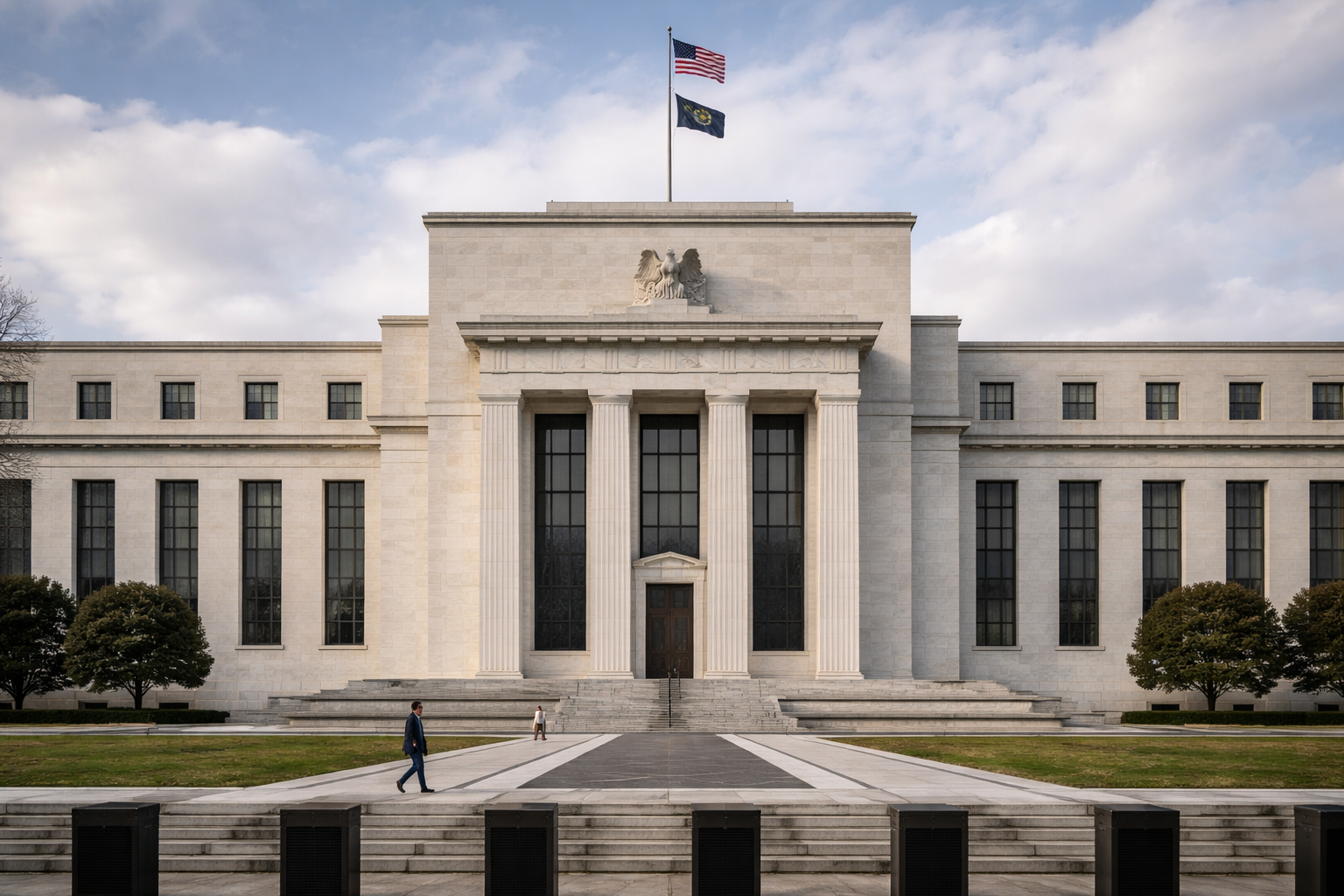
UBS expects the Federal Reserve to raise interest rates twice this year after a stronger-than-expected August jobs report reinforced expectations of a resilient US economy.
The bank now forecasts 25-basis-point rate hikes in both September and December, reversing its earlier call for no policy changes in 2026.
The shift comes as markets reassess the Fed’s policy outlook following stronger employment data and hawkish signals from Fed Chair Kevin Warsh.
UBS said the potential for higher rates could create opportunities across equities, bonds and gold, depending on how the economy and inflation evolve.
UBS raises Fed rate outlook after strong jobs data
US employers added 162,000 jobs in August, well above forecasts of roughly 55,000, while the unemployment rate remained at 4.1%.
The increase was the strongest monthly employment gain since March and contributed to a rise in market expectations for a September rate hike.
Financial markets were pricing in about a 60.4% probability of a 25-basis-point increase at the Fed’s September 15-16 meeting, according to CME’s FedWatch tool, up from 59.4% on Friday.
UBS said stronger labor data, alongside Warsh’s hawkish comments at the Jackson Hole symposium and rising inflation risks linked to supply bottlenecks, were enough to change its rate forecast.
However, the bank noted that the investment implications would depend on the reason behind any Fed tightening.
A rate hike driven by stronger economic growth would have different consequences from one prompted by persistent inflation and weaker growth.
“A Fed responding to US economic strength is very different from a Fed responding to inflation problems,” UBS strategists said.
Equities and bonds could offer opportunities
UBS remains positive on global equities despite the possibility of short-term volatility from higher yields.
The bank said stronger rates would not necessarily outweigh medium-term factors such as artificial intelligence-related capital spending, resilient economic activity and broad earnings growth.
The bank continues to favor sectors linked to AI, power and resources, as well as longevity themes, which it expects to benefit from stronger investment, productivity gains and structural growth.
UBS also sees potential opportunities in government bonds.
Higher expectations for the Fed’s policy rate could weigh on shorter-duration bonds and limit their potential for capital gains.
As a result, UBS said it would no longer recommend locking in yields in short- to medium-duration bonds as an alternative to holding cash.
Instead, the bank sees opportunities in medium- to longer-duration bonds following the recent increase in yields.
Such bonds could benefit if tighter monetary policy strengthens confidence in the Fed’s commitment to controlling inflation, reduces longer-term inflation expectations or slows economic growth.
Dollar and gold outlook remains mixed
A more hawkish Federal Reserve could support the US dollar, particularly if the policy divergence between the Fed and other central banks increases.
UBS said stronger economic growth combined with tighter monetary policy could sustain the dollar through stronger capital flows and relative economic performance.
Gold could face near-term pressure from higher real interest rates and a stronger dollar.
However, UBS said persistent inflation, geopolitical uncertainty and concerns about fiscal and monetary credibility could support demand for bullion as a safe-haven asset.
“We currently view gold more as a portfolio hedge and diversifier, rather than as a tactical expression of the next Fed decision,” UBS strategists said.
The bank therefore sees potential opportunities across several asset classes, while emphasizing that the broader economic backdrop and inflation trajectory will matter more for portfolios than the outcome of a single Fed meeting.
The post UBS sees two Fed hikes in 2026: what should investors buy appeared first on Invezz